
Paint correction videos make the process look simple: apply compound, run a polisher over the panel, wipe away a hazy residue, and reveal a glossy, swirl-free finish underneath. In practice, paint correction is a more technical process than it appears, and the gap between a DIY attempt and a professional result often comes down to experience reading the paint, choosing the right pad-and-compound combination, and knowing when to stop.
This article breaks down what’s actually involved in DIY paint correction, where it tends to go wrong, and how that compares to having the work done professionally.
What Paint Correction Actually Involves
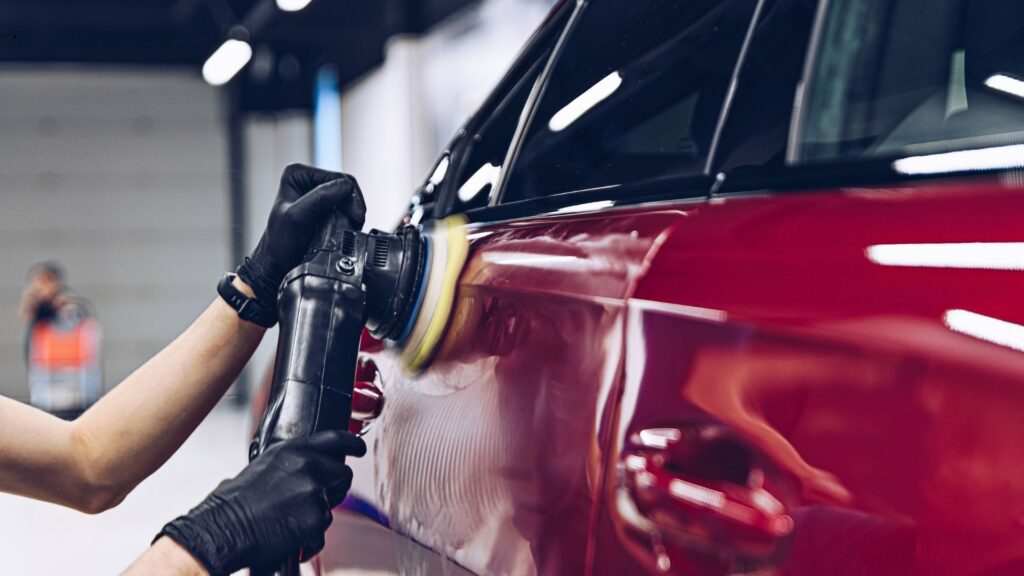
Paint correction is the process of removing surface-level imperfections — swirl marks, light scratches, oxidation, water spots, and other defects — from a vehicle’s clear coat using machine polishing. It works by leveling a microscopically thin layer of the clear coat to remove the defects sitting within it, which is why it’s a precision process rather than a simple buff-and-shine.
Can Paint Correction Be Done at Home?
Technically, yes — dual-action polishers designed for home use are widely available, along with compounds and pads marketed for DIY correction. Whether it should be done at home is a different question, and it depends heavily on the condition of the paint, the tools being used, and the experience of the person doing the work.
The Case for DIY Paint Correction
DIY correction can make sense in limited situations:
- Very light defects. Light swirl marks on a vehicle with otherwise healthy paint may respond well to a gentler, single-step polish using a consumer-grade dual-action polisher.
- Budget constraints. Professional correction is a labor-intensive service, and DIY tools cost less upfront for owners willing to invest the time to learn.
- Learning and control. Some owners simply prefer doing the work themselves and are willing to accept a less-than-professional result in exchange for the experience.
Where DIY Paint Correction Tends to Go Wrong
Several risks come up consistently with DIY correction attempts:
- Removing too much clear coat. Clear coat is thin, and it’s possible to cut through it — especially with a rotary polisher or aggressive compound — permanently damaging the panel and requiring repainting rather than correction.
- Uneven results. Without experience reading paint thickness and defect depth across different panels, DIY correction often produces inconsistent gloss and leftover defects in some areas while other areas are corrected properly.
- Buffer trails and holograms. Incorrect pad rotation speed, pressure, or technique can leave fine circular marks (often called holograms) in the clear coat — a different defect than what the process was meant to fix.
- Misreading what the paint needs. Not every defect responds to the same pad-and-compound combination. Selecting the wrong combination can mean the imperfections aren’t actually removed, just temporarily masked, and reappear after the next wash.
- Underestimating the time investment. A full vehicle correction is a multi-stage, multi-hour (often multi-day) process done correctly. DIY attempts frequently underestimate how long proper correction actually takes.
What Professional Paint Correction Adds
A professional correction service at First Choice Detail LLC typically involves:
- Paint inspection and defect assessment before any polishing begins, to understand what depth of correction the paint actually needs.
- Multiple correction stages, using different pad and compound combinations matched to the paint’s specific condition rather than a single generic pass.
- Controlled technique that accounts for clear coat thickness, panel edges, and high-risk areas (like body lines and edges) where clear coat is often thinner.
- Consistent results across the entire vehicle, rather than isolated improvement on a few panels.
How to Evaluate Your Own Vehicle’s Paint
Before deciding between DIY and professional correction, it helps to understand what’s actually being addressed:
- Swirl marks — fine, circular scratches usually caused by improper washing or automatic car washes, most visible in direct sunlight.
- Oxidation — a dull, chalky appearance that develops as clear coat breaks down, often from prolonged UV exposure.
- Water spots — mineral deposits left behind when water evaporates on the surface, which can etch into the clear coat if left untreated.
- Light scratches — shallow marks that haven’t penetrated through the clear coat into the base color layer.
Vehicles with heavier oxidation, deeper scratches, or paint that’s already been through multiple prior corrections tend to carry more risk for a DIY approach, since there’s less margin for error in how much clear coat remains.
Why This Matters More If Ceramic Coating Is the Next Step
For owners planning to have a ceramic coating applied, the condition of the paint underneath matters even more, since a coating locks in whatever the paint looks like at the time of application — including any defects still present. Uneven or incomplete DIY correction can mean those imperfections are sealed under the coating rather than resolved.
Making the Decision
DIY paint correction isn’t inherently reckless, but it does carry real risk of permanent clear coat damage if attempted without the right knowledge, tools, and patience — particularly on paint with moderate to heavy defects. For vehicles with more than light surface imperfections, or for owners preparing their vehicle for ceramic coating, professional correction from First Choice Detail LLC reduces that risk and is more likely to produce a consistent, even result across the whole vehicle.
Frequently Asked Questions
Is it safe to try paint correction myself?
It can be, on paint with only light defects and using a consumer-grade dual-action polisher with proper technique. The risk increases significantly with heavier defects, rotary polishers, or inexperience reading how much clear coat is safely available to correct.
What’s the biggest risk of DIY paint correction?
Removing too much clear coat, which can permanently damage the panel and isn’t something correction can fix — at that point, repainting is typically the only option.
How is professional paint correction different from a basic buff and wax?
A basic buff and wax adds temporary shine without necessarily removing the defects underneath. Paint correction at First Choice Detail LLC is a more targeted process that levels the clear coat to physically remove the imperfections themselves.
Can DIY correction damage my car’s paint?
Yes, if done improperly — particularly with aggressive compounds, incorrect pad choices, or excessive pressure and heat during machine polishing.
Should I have paint correction done before ceramic coating?
For most vehicles with visible swirl marks, scratches, or oxidation, correcting the paint before coating helps ensure those imperfections aren’t sealed in under the coating.