
One-step paint correction uses a single balanced pad-and-polish pass to remove roughly fifty to seventy percent of light wash swirls while restoring bright gloss, whereas multi-step paint correction pairs a dedicated cutting compound stage with one or more refining polish stages to remove eighty to ninety-plus percent of deeper scratches, heavy car-wash marring, and oxidation. Choosing between them depends on defect depth, paint color, remaining clear-coat thickness, and how your vehicle is driven around Utah.
Drivers across Roy, Ogden, West Haven, and Clinton often hear “1-step,” “2-step,” and “multi-stage” tossed around interchangeably when comparing detailing quotes. Breaking down what actually happens on the clear coat during each polishing pass—and why more aggressive correction is not automatically the smarter choice for every daily driver—lets you pick the right service with confidence.
One-Step vs. Multi-Step Paint Correction Compared Side by Side
Every machine correction appointment begins with the exact same foundation: a thorough wash, chemical iron decontamination, clay bar treatment, and plastic-trim masking so polishing pads never drag gritty fallout across paint. Where the two services diverge is the number of abrasive machine passes performed across each panel afterward:
| Comparison Factor | One-Step Paint Correction (Single-Stage Polish) | Multi-Step Paint Correction (Compound + Refine) |
|---|---|---|
| Machine Polishing Passes | 1 calibrated medium/fine polish pass per panel | 2 to 3+ separate passes (heavy cut compound + fine finishing polish) |
| Typical Defect Removal | ~50% to 70% of light wash swirls, towel haze, and mild oxidation | ~80% to 90%+ of moderate swirls, deeper RIDS, etching, and heavy oxidation |
| Clear-Coat Removal | Minimal—preserves maximum factory clear coat for future years | Moderate, controlled leveling measured within safe paint-depth limits |
| Typical Shop Bay Time | Half-day to 1 full day depending on vehicle size | 1 to 2+ full shop days especially on crew-cab trucks and black SUVs |
| Best Vehicle Match | Newer cars, silver/white daily drivers, well-kept commuters | Dark-colored vehicles, tunnel-wash victims, neglected used cars, show builds |
| First Choice Detail Tier | “3 Step” Package (Decon + Clay + Single-Stage Polish + Wax) | “Paint Correction” Package (Decon + Clay + Compound + Multi-Stage Polish + Wax) |
If you want to know how drop-off inspection, prep, and pickup work from start to finish, our companion guide on what to expect before, during, and after your paint correction appointment in Roy, UT walks through the appointment logistics while this guide focuses strictly on choosing the right stage count.
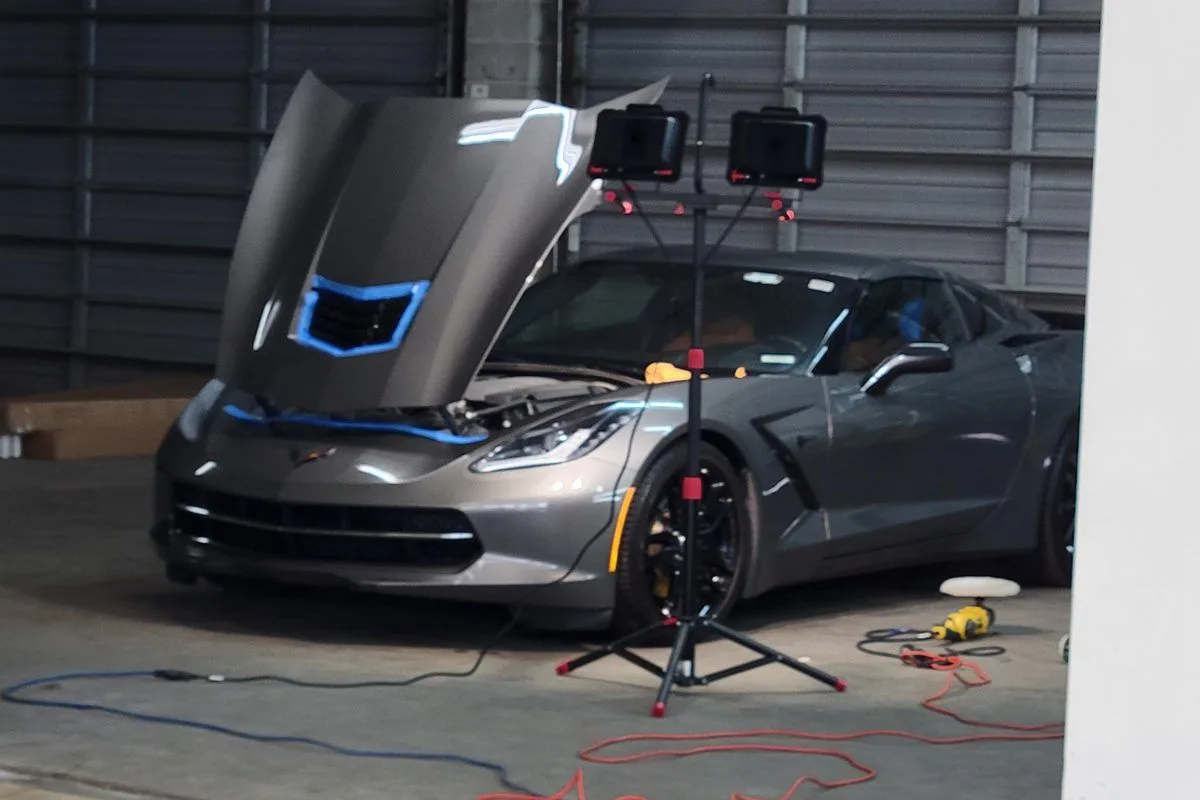
How One-Step Paint Correction Works (and Where It Shines)
In a one-step paint correction, the technician selects a single diminishing-abrasive polish and medium-polishing foam pad capable of cutting away shallow wash spiderwebs during the first half of the buffing cycle while breaking down fine enough to finish clear and glossy without leaving haze behind. Because one pad-and-liquid combination has to handle both cutting and finishing simultaneously, there is a natural ceiling on how aggressive that single step can be.
If a technician uses too coarse a compound in a single step, deep scratches come out faster yet the clear coat finishes slightly cloudy under direct Utah sunshine. By calibrating a balanced medium-fine polish on a test spot, one-step correction delivers dramatic visual pop—eliminating dull gray oxidation veil and fine towel swirls—at roughly half the labor time of multi-stage work.
One-step polishing hits the sweet spot for three common situations in Weber County: brand-new trucks and SUVs with light dealership delivery marring, white, silver, or pearl daily commuters driven year-round on I-15 where chasing every isolated deep scratch makes little practical sense, and lightly swirled vehicles prepping for professional ceramic coatings.
Why Multi-Step Paint Correction Splits Cutting From Finishing
Separating defect removal into two or more dedicated stages frees each machine pass to do one job without compromise. During Stage 1 (compounding), the technician pairs a heavy-cut compound with a microfiber, wool, or firm cutting pad to level stubborn Random Isolated Deeper Scratches (RIDS), years of spinning tunnel-wash brush tracks, baked hard-water craters, and chalky UV oxidation.
That heavy cutting pass flattens deep valleys in the clear coat, yet leaves behind microscopic compounding micro-haze—similar to sanding wood with medium grit before fine grit. Stage 2 (refining or finishing polish) switches to a clean soft foam pad and ultra-fine jeweling polish to erase every trace of Stage 1 compounding haze, unlocking deep liquid-mirror reflections across hoods, fenders, and doors.
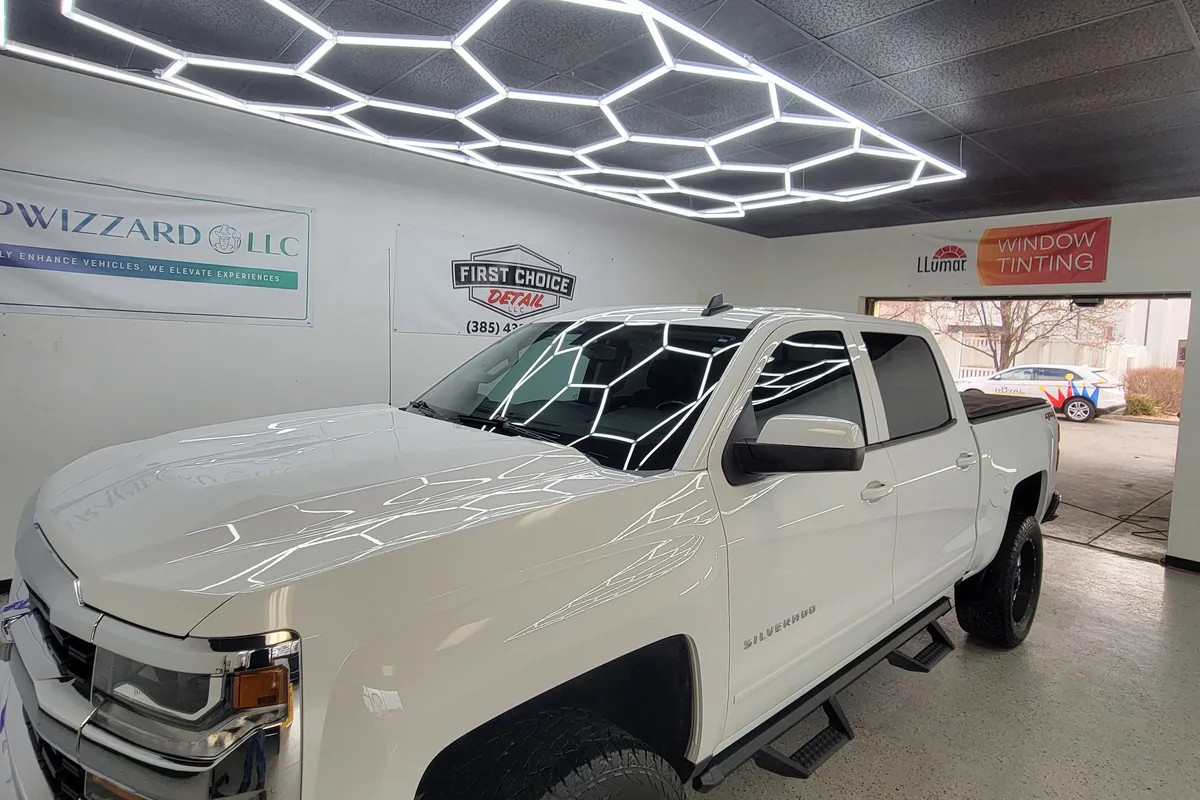
How Paint Color and Clear-Coat Hardness Change the Equation
Two vehicles with identical car-wash histories can respond completely differently under a dual-action polisher because automotive clear coats vary widely in hardness by manufacturer, plant, and repaint history:
- Hard clear coats (common on many German sedans, Corvettes, and late-model GM/heavy-duty pickups): Resist light wash scratches better day to day, yet once deep swirls set in, a mild one-step polish may only remove forty to fifty percent of heavier marks—making two-step compounding plus polishing the cleaner path to high defect correction.
- Soft or sticky clear coats (common on many Japanese imports, Teslas, and jet-black finishes): Cut rapidly during polishing, meaning a well-matched one-step polish removes a surprising percentage of swirls, yet deep compounding almost always requires a meticulous ultra-fine second finishing pass so zero micro-marring shows on dark panels in noon sunlight.
- Light vs. dark paint colors: White, silver, champagne, and light gray scatter reflected light and hide isolated deeper RIDS naturally once shallow swirl haze is polished clear in one step. Jet black, midnight blue, dark green, and deep red act like mirrors that spotlight every remaining scratch unless refined further.
Clear-Coat Thickness Preservation: Why More Cut Isn’t Always Better
Factory automotive clear coat is thinner than a standard sticky note—typically measuring around one and a half to two mils—and contains the majority of UV inhibitors near its upper layer that shield underlying color base coat from peeling under high-altitude Utah sun. Every abrasive compounding pass permanently removes a microscopic slice of that finite clear-coat budget.
Chasing 99-percent show-car perfection on a daily-driven family SUV that parks outside in Ogden snowstorms and sees winter road grit every week sacrifices valuable UV-blocking clear coat unnecessarily. Often the smartest, healthiest approach on a daily driver is removing seventy-five to eighty-five percent of visible swirl haze while deliberately leaving one or two deep isolated trunk-loading scratches softened rather than thinned dangerously close to base coat.
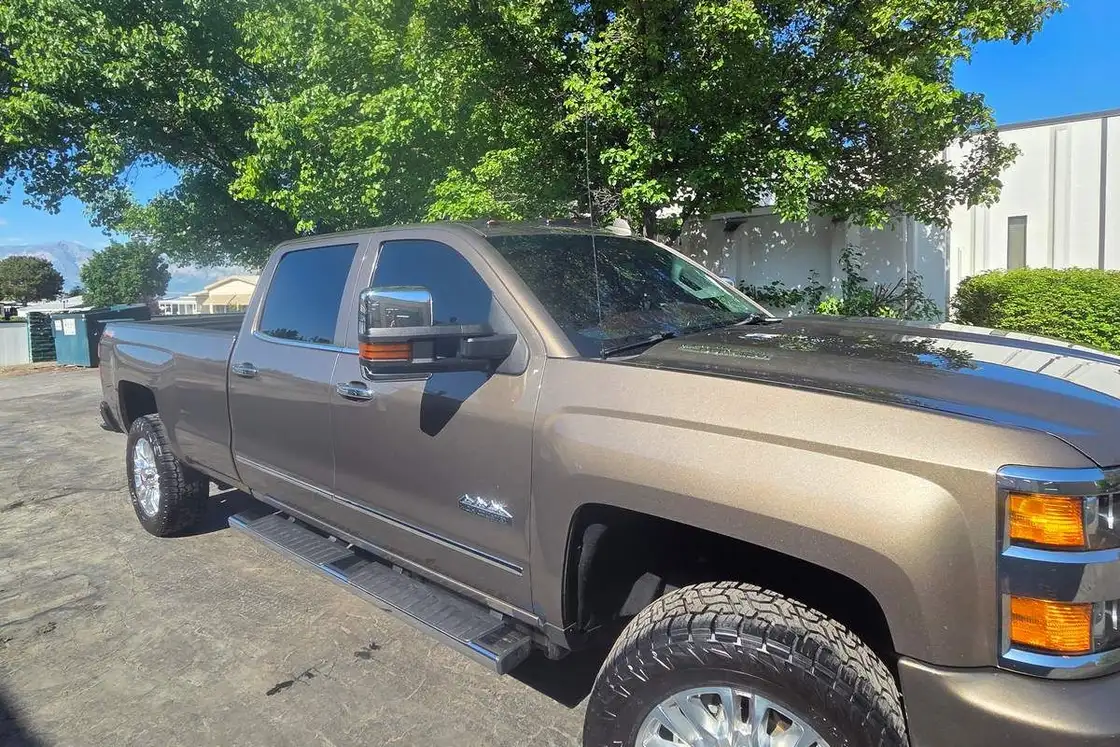
Why the In-Person Test Spot Decides Between 1-Step and Multi-Step
No honest shop should lock you into multi-step correction over the phone without inspecting your paint under angled lighting first. When you bring your vehicle to First Choice Detail LLC at 3990 S 1900 W in Roy, UT for professional paint correction services, inspecting a masked test section shows side-by-side what a single-stage polish achieves versus adding a dedicated compounding pass.
Seeing the real improvement on your own hood lets you weigh turnaround time, budget, and protection goals—whether finishing with protective wax included in our standalone correction packages or locking the corrected clear coat under a Silver or Gold Ceramic Coating package for multi-year winter defense.
Five Signs Your Vehicle Needs Multi-Step Correction Instead of One-Step
Inspecting your clean, dry hood under direct Utah sunlight or overhead LED gas-station canopy lights reveals clear visual clues when defects exceed single-stage polishing range:
- Dense cobweb swirl halos surrounding every sun reflection after years of brush-style tunnel car washes along Riverdale Road or 1900 West.
- Chalky, Milky UV oxidation across horizontal truck hoods, roof caps, and bedsides where single-stage polish pads clog rapidly with dead oxidized resin unless compounded first.
- Random Isolated Deeper Scratches (RIDS) from snow brushes, ice scrapers, or cargo contact that stay sharply visible even when wet with water.
- Baked hard-water crater rings from summer lawn sprinklers that leave tiny recessed rims in the clear coat after chemical mineral washing.
- Body-shop rotary buffer holograms or sanding pigtails on repainted panels that require structured two-stage leveling and ultra-fine foam finishing to clear completely.
If you are still unsure whether dullness on your car comes from bonded surface film or true clear-coat marring, our diagnostic guide on paint correction signs for Roy, UT drivers walks through how to tell surface dirt apart from polishable clear-coat defects.
Keeping Swirls From Coming Back After Either Correction Level
Whether you invest in a one-step polish or full multi-stage correction, clear coat remains just as scratchable afterward if washed with dirty sponges or automatic tunnel brushes. Preserving that crisp reflection across Northern Utah winters comes down to pre-rinsing road salt thoroughly before touching paint, washing top-down with clean two-bucket microfiber mitts, keeping snow brushes off painted hoods when clearing heavy powder, and maintaining sacrificial wax, sealant, or ceramic protection year-round.
First Choice Detail LLC serves car, truck, and SUV owners across Roy, Ogden, West Haven, Clinton, and surrounding Northern Utah communities. Reach out through our Roy, UT contact and quote page to schedule an in-shop paint inspection and test-spot consultation.
Frequently Asked Questions
How much swirl removal can I expect from one-step vs. multi-step paint correction?
Depending on factory clear-coat hardness and defect depth, a single-stage machine polish typically removes roughly fifty to seventy percent of visible wash swirls and light haze, while multi-step compounding and finishing polish often achieves eighty to ninety-plus percent defect removal within safe clear-coat limits.
Does multi-step paint correction remove too much clear coat for a daily driver?
Controlled multi-step correction removes only a tiny fraction of healthy factory clear coat—measured in microns—when matched to a test spot. However, if a vehicle will return to daily outdoor highway driving or occasional imperfect washes, a one-step polish often preserves more reserve clear-coat thickness for future years while still transforming gloss.
Can either one-step or multi-step correction fix a scratch that catches my fingernail?
A scratch deep enough to catch a fingernail cleanly has usually cut through the clear coat into color base coat or primer. Machine polishing softens the sharp reflective edges of deep scratches to make them less noticeable from five feet away, without replacing missing paint.
Why can’t a detailer just stop after heavy compounding without a second polishing step?
Aggressive cutting compounds and microfiber or wool pads level deep scratches fast, yet their coarse abrasives leave behind faint microscopic compounding haze—especially visible as milky cloudiness on black, dark blue, and red paint. A second refining polish step with a soft foam pad restores crystal-clear mirror depth.
Which paint correction level is best before getting ceramic coating in Roy, UT?
Because ceramic coating locks in the exact optical state of your clear coat for years, brand-new or lightly swirled vehicles usually pair well with a one-step polish, whereas darker pre-owned trucks and sports cars with heavy car-wash marring benefit most from multi-step paint correction first.
How do First Choice Detail LLC’s standalone correction packages differ?
At First Choice Detail LLC in Roy, UT, our “3 Step” package pairs decontamination washing and clay bar treatment with a single-stage machine polish and protective wax, while our full “Paint Correction” package adds dedicated compounding followed by multi-stage machine polishing and protective wax.
Can repainted hoods or fenders be machine-corrected the same way as factory paint?
Aftermarket body-shop clear coat varies widely in thickness and cure hardness compared to OEM factory paint. Sharing known collision or repaint history before work begins lets technicians inspect edges carefully and calibrate pad aggressiveness safely on a test spot.